

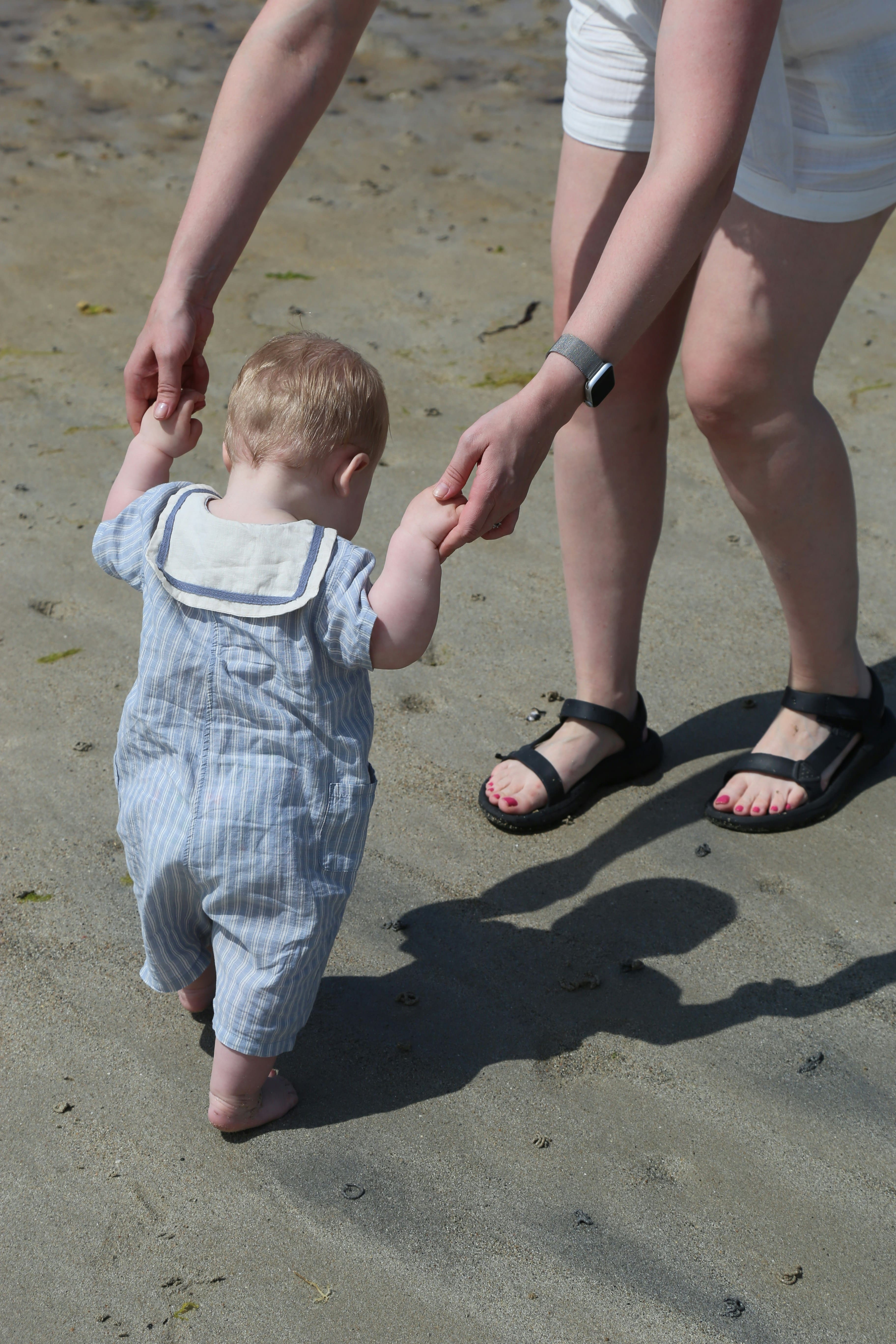
The first smile. The first word. The first step. These moments aren't just emotional — they're important indicators of your child's development.
But most parents let these moments pass by relying on memory. "I think it was around month 10" or "I can't remember exactly." Yet this information can be critical for both parents and doctors.
What is a milestone?
Milestones are skills children acquire within certain age ranges. They fall into four main categories:
Gross motor: Sitting, crawling, walking, hopping
Fine motor: Pincer grasp, using a spoon, drawing
Language: Cooing, babbling, first word, sentences
Cognitive: Object permanence, recognizing colors, counting
And two categories that are often overlooked: social development (stranger anxiety, sharing) and feeding (solid foods, weaning from the bottle).
What does WHO say?
The World Health Organization has published official data on 6 key gross motor milestones. This data shows when healthy children typically acquire these skills in three stages: earliest, typical, and latest.
For walking alone, for example:
- Earliest: 8 months
- Typical: 12 months
- Latest: 18 months
If a child still can't walk at 18 months — that's a signal to see a doctor. But for a child who isn't walking at 14 months, there's no cause for concern yet.
Is "early" always good?
No — and this is an important point. If a child achieves a milestone genuinely early (before the expected window), that's wonderful. But some parents create unnecessary comparisons under the pressure of "early."
When a milestone is logged in Momena, the app shows:
- 🌟 Early — before the expected window
- ✓ Normal — within the expected window
- ⚠️ Late — after the expected window (consult your doctor)
Why keep records?
For doctor visits: Your pediatrician will ask "when did they start walking?" A precise date makes the appointment far more productive.
For siblings: When your second child comes along, you can compare with your first — purely out of curiosity.
For memories: "Their first word wasn't 'mama' but 'car,' said at 11 months" — these details become precious in later years.
Development tracking in Momena 1.5
In this release, we added 50 milestones based on WHO and American Academy of Pediatrics (AAP) data. Across gross motor, fine motor, language, cognitive, social, and feeding categories.
Based on your child's age, the app automatically shows:
- Overdue — not yet achieved, expected age has passed
- Current — expected to be achieved now
- Upcoming — expected in the next 4 months
- Completed — logged with date and note
You can add a note to each milestone. A detail like "took their first steps at grandma's house" becomes priceless years later.
All your data is encrypted and stored only on your device.